



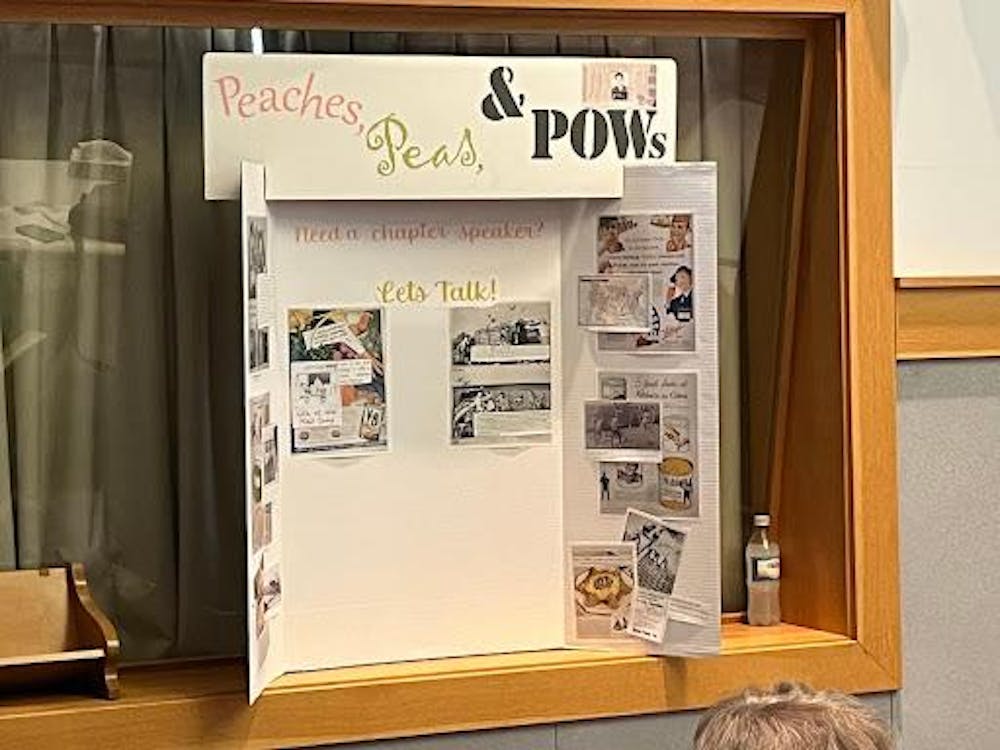
MUNCIE, Ind.--- On the afternoon of Thursday, March 12, Carnegie Library in Muncie held a presentation event called “Peas, Peaches, & POWS.”
Presented by the vice chair of the Service for Veterans Prisoners of War (POW) Committee, Patti Moy, the event told the stories of war prisoners throughout U.S. history, from the American Revolution, the American Civil War, to the World Wars. She focused on how both German and Italian prisoners of war (POWs) worked in Indiana’s agricultural and canning industries during World War II.
Moy believes that with the state’s deep connections to the manufacturing and agricultural industries, each Hoosier is part of this pinpoint of history and has a story to tell.
“It’s part of our Hoosier history,” Moy said. “We have a lot of individuals who came from the smaller communities who had family stories and local history of these individuals.”
Moy highlights how these POWs, despite being from the enemy side, were treated well inside the state. She notes these international treatment laws came from conventions like the Geneva Convention.
“You had all those rules, the Geneva Convention and everything,” Moy said, “and we were hoping that our members overseas were treated the same here.”
But one problem this time in history faces is that those in the present forget these stories exist. This stems from what Moy describes as adults being unable to make connections.
“Individuals in the community, they don’t make that connection of where your food and everything is supposed to be coming from,” Moy said. “And so it’s a surprise when they found out that, ‘Oh, our men went off to war, so somebody had to do the work there to keep everybody fed.’”
Through these stories, Moy hopes people never forget the impact these prisoners had on Indiana’s history, even if it takes cans of beans and fields of corn.
Contact Evan Shotts with comments at evan.shotts@bsu.edu.