



The house on West Carson Street in Muncie was packed.
It was Nov. 2, 2024, and the house party had spilled out onto the front yard, where then 20-year-old Austin Elliott stood socializing with people he’d just met.
In the front yard of a stranger's house, Elliott’s chatter was forcibly interrupted.
Two gunshots.
He fell instantly. A bullet had entered his back and lodged in his spine.
The party erupted into chaos as attendees scattered in every direction.
Elliott remembers how cold he felt lying on the lawn, overcome with confusion. He doesn't remember being as scared as he knows he should have been.
When police arrived, they asked Elliott what had happened. One officer mentioned something he did not realize: He had been smiling.
“Obviously, there’s nothing really to smile about,” Elliott said. “But I guess that was my trauma response.”
Nick Zehr, Elliott’s friend of over a decade, was with him earlier that night before the pair would become separated and end up at different parties.
Zehr’s phone started blowing up with messages from friends asking where Elliott was. Tracking his phone's last known location, Zehr found Muncie Police Department and Ball State University Police Department officers surrounding a taped-off front yard on Carson Street.
After speaking with an officer, Zehr left his contact information and headed home.
While sitting with his roommate, they heard a knock on their door half an hour later.
“We opened the door and [an officer] told us that Austin had been shot and then he had been taken to IU Methodist Hospital,” he said. “I was just kind of sitting there, I didn't really know what I was feeling.”
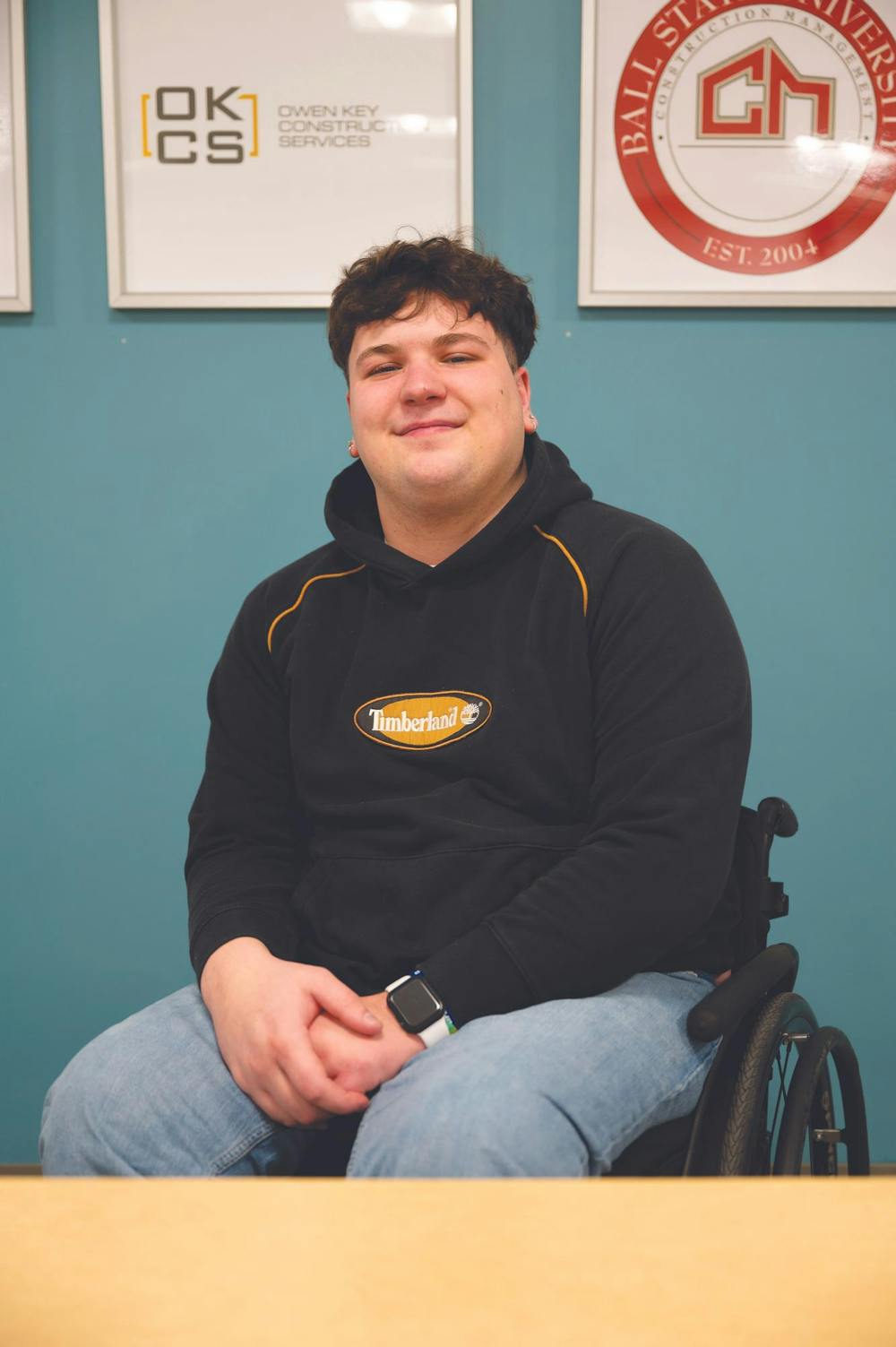
One year later, the 21-year-old third-year construction management student has just completed his first semester back on campus at Ball State, living independently and navigating campus in a wheelchair, determined not to let one night define his future.
‘I’m awake and alive’
The night of the shooting, Elliott spent an hour at Ball Memorial Hospital before being airlifted to IU Methodist Hospital in Indianapolis.
Upon arrival, he called his parents Jessica and Travis Elliott.
“I was like, ‘Please just drive safe. I don’t want anything to happen to you guys.’ I’m awake, I’m fine — well, not really fine — but I’m awake and alive, and I’ll be here when you get here,” Austin said.
Travis called the phone call “gut-wrenching,” but said Austin's humor, asking them to drive safely and not “95 miles per hour,” was reassuring and brought them hope.
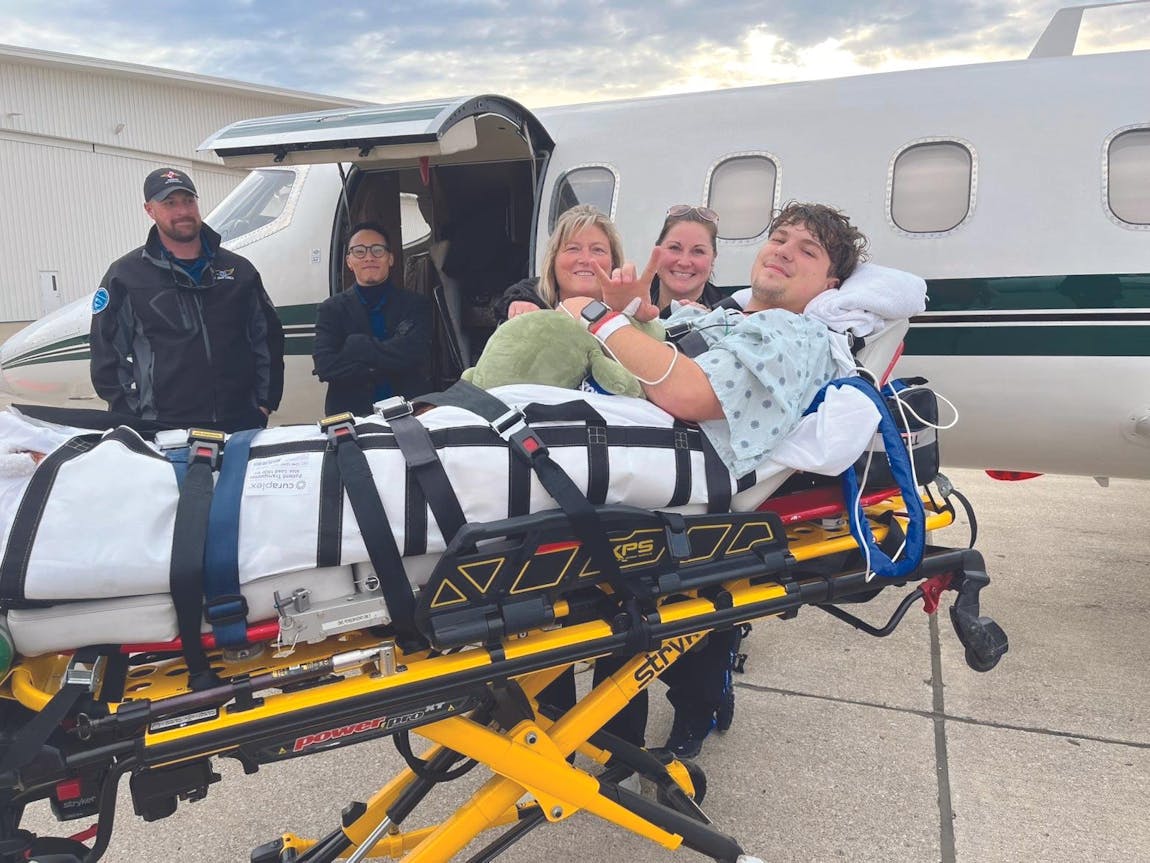
Third-year Ball State student Austin Elliott poses for a photo before being transported to Shirley Ryan AbilityLab for physical therapy Nov. 2024 in Chicago. Austin Elliott, Photo Provided
Zehr and his friends made their way to Indianapolis at the same time, texting Jessica on the drive down. By the time they arrived around 3 a.m., Austin’s aunt and a few other friends and family members were already in the waiting room. Zehr recalls them all sitting in silence. Eventually, one of his friends suggested they pray.
Gathered in a circle in the waiting room of IU Methodist, they did just that. Soon after, Austin’s parents and youngest brother walked in.
Travis said arriving at the emergency room and seeing Austin for the first time was difficult. Watching as the nurses asked Austin to move different parts of his body, which he could not, produced an emotion Travis said hit him and his wife “like a truck.”
“I just couldn't process it at first,” he said.
After being with Austin for a little while, his parents returned to the waiting room and had the hard responsibility of telling the group that Austin was paralyzed.
“You never expect that your child is going to get shot by a gun. It's so surreal. I mean, it happens too much here in this country, but you never think it's going to be you,” Jessica said.
Despite everything, Jessica said she was surprised by how positive and funny Austin was, cracking jokes and making everyone laugh.
The medical staff met and decided not to remove the bullet. Austin had sustained a T3 ASIA A complete spinal cord injury, one of the most serious injuries on the American Spinal Injury Association Impairment Scale. Removing the bullet from Austin’s back had the potential to cause severe damage.
“They collectively determined that it wasn't worth the risk of doing more damage, and that it was a blessing that he can use his hands, his arms, his fingers,” Travis said. “I mean, my simple mind is like, ‘No, we gotta get that out of there so that it can heal … [but] it just doesn't work that way.”
The bullet remains in Austin's back today.
‘I just have to go for it’
After about a week in the hospital, including a short stint in the ICU, Austin was transported to the Shirley Ryan Ability Lab in Chicago for rehab, ranked No. 1 in the United States for spinal cord injury rehabilitation.
When Jessica’s friend suggested Shirley Ryan, she researched it immediately and knew it was where Austin needed to be.
“When we found out that they had room for him, I just cried because I knew they would help him so much,” she said.
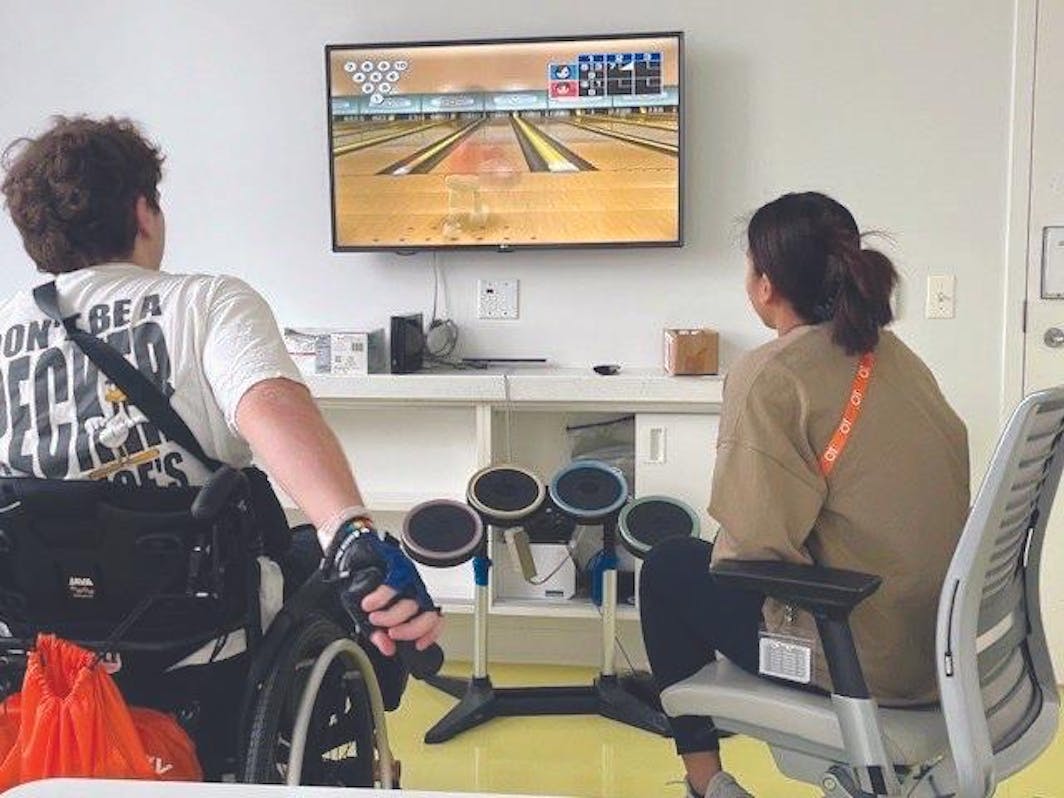
Doctors planned six weeks of rehabilitation. Austin worked with occupational and physical therapists daily, learning how to transfer from his wheelchair, navigate daily tasks and build the strength and skills he would need to live independently.
The facility also arranged a room for Jessica at the Ronald McDonald House nearby, where she stayed throughout Austin’s rehab.
While Austin said he had not thought much about the permanence of his situation, he remembers a specific moment in time when he processed his new reality. Alone in a silent room in the Willis Tower overlooking Lake Michigan, he looked out a large window at Lakeshore Drive, watching people run, bike and walk alongside the water.
It was then that he realized his life would never be the same.
“Things are not going to be easy, things are not going to be the same,” he said. “It was time to decide whether I let what happened to me rule my life and my feelings and decision making and everything around that, or if I just own it and make what I can with it, whether that's good, bad, ugly — whatever. I just have to go for it.”
In early December 2024, after Austin had been at Shirley Ryan for about three weeks, Zehr and a few other friends drove to Chicago to visit. Upon arrival, they found Austin competing in a bocce ball tournament with Chicago firefighters, one of many scheduled events at the lab designed to help patients adjust to life after injury.
That night, the group went bowling at a facility where Shirley Ryan takes wheelchair users to practice navigating the real world.
When Zehr first visited Austin at IU Methodist, Austin could not even sit up in bed without assistance. Now, just weeks later, he was competing, joking and showing his friends around the facility, something Zehr described as taking a weight off his shoulders.
“It was amazing to see,” Zehr said. “... He's a very resilient person. He's faced adversity that I've never even thought about or have been around before. Seeing how he's handled it in the last year is beyond inspiring to me.”
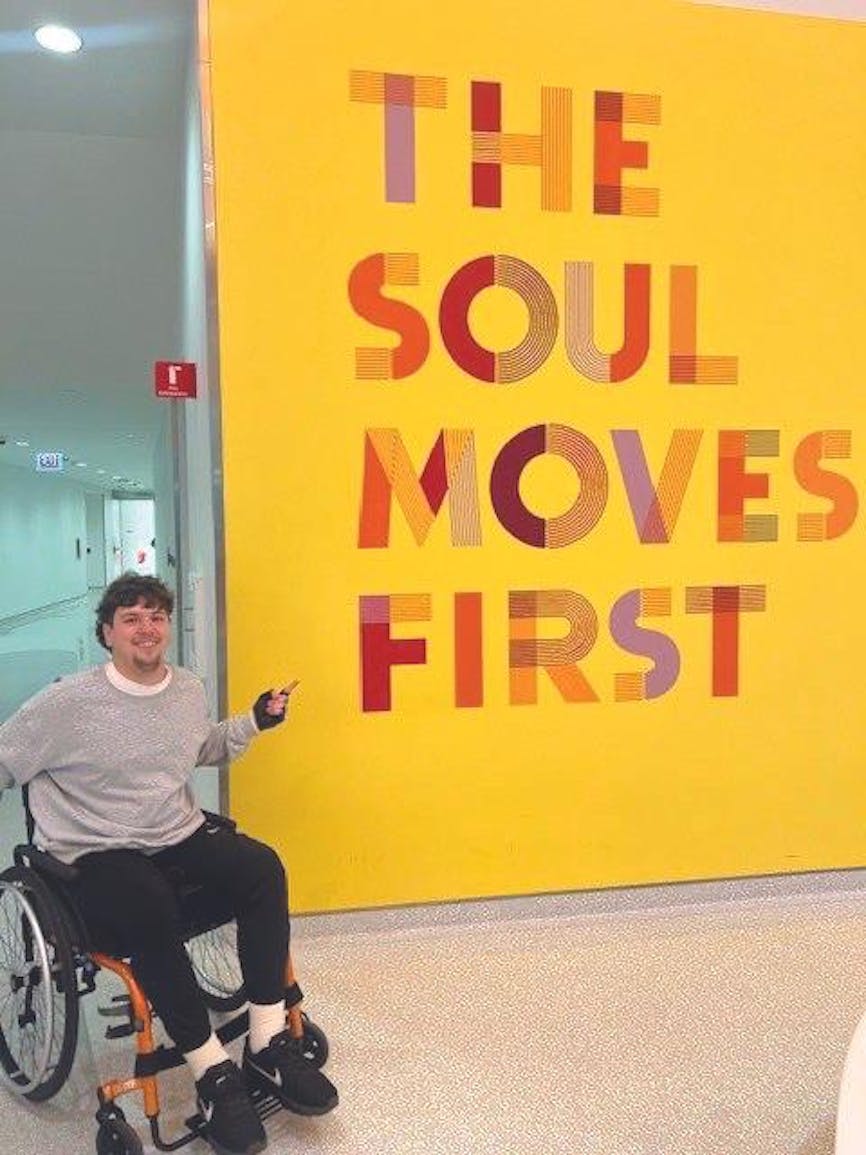
On Dec. 22, 2024, Austin's 21st birthday, he was discharged from Shirley Ryan and came home, just in time for the holidays. By March, he was driving again with hand controls installed in his truck.
“He attacks everything with a lot of gusto,” Jessica said. “He’s super brave … He astounds me with his courage.”
‘Trying to get my life back’
This past fall, one year to the date after the incident, Austin was among the more than 2,000 participants who took part in Shirley Ryan Ability Lab’s 17th annual SkyRise Chicago event, the tallest indoor stair climb fundraiser in the United States, raising over 1.2 million dollars toward the lab's mission.
Austin said the experience was “amazing,” noting that his family and friends raised a grand total of a little over $4,000.
“[SkyRise] fell directly on the date when this all happened to me. I just felt like, I don't know, it was meant to be,” he said.
Austin also returned to Ball State for his third year of undergrad, living independently in an off-campus apartment.
“I was just trying to get my life back,” he said. “I didn’t want to miss any more time than I already had.”
Austin’s younger brother, Drew, a second-year student at the university, lives nearby, and Austin’s close friends remain a constant presence in his life. Jessica said she and Travis worried about him being able to do small things, like taking out the trash, a task they’d helped him with during recovery. But knowing Drew and Austin’s friends are nearby gave them peace of mind.
Austin now navigates campus in his wheelchair. He has had to learn which buildings have accessible entrances, which routes are fastest and how to advocate for himself when spaces aren’t accessible.
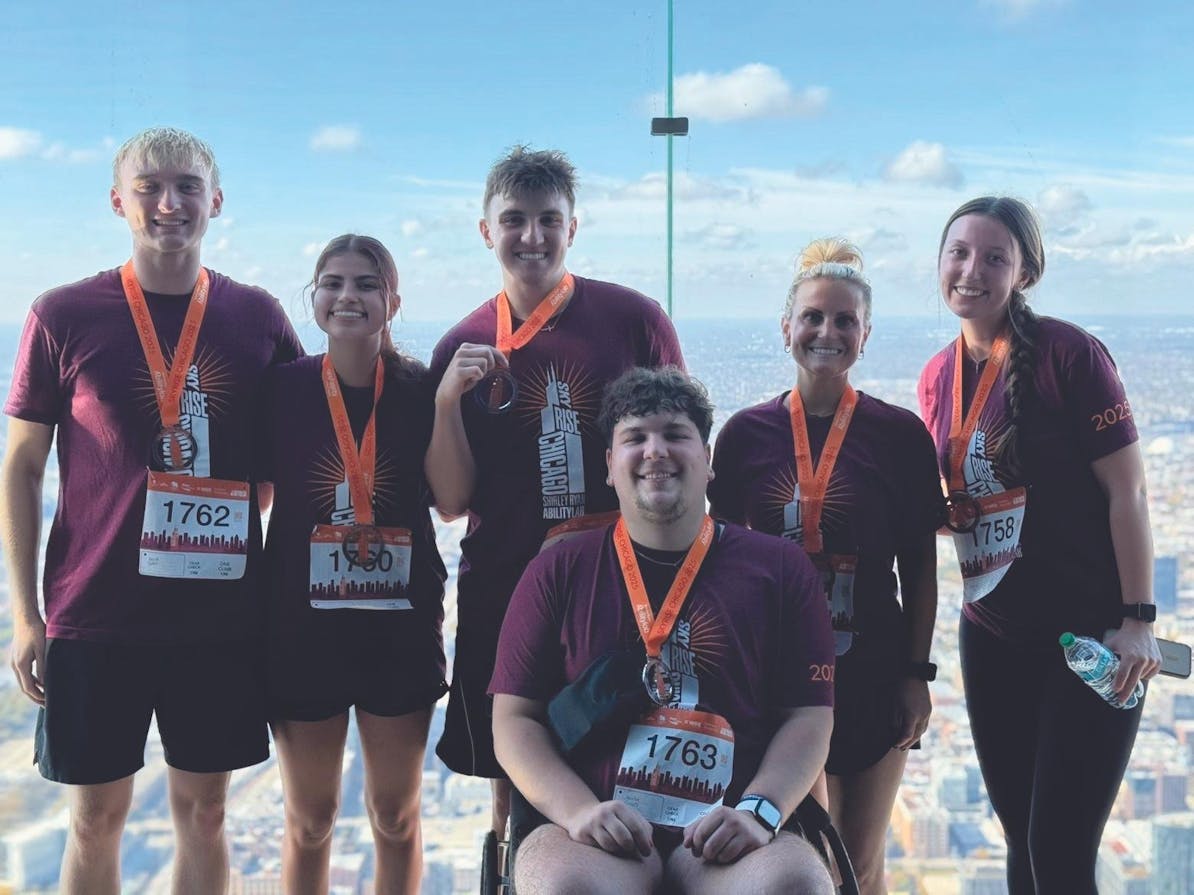
Third-year Ball State student Austin Elliott poses for a photo with his friends at Shirley Ryan Hospital during its annual "SkyRise Chicago" fundraiser Nov. 2025 in Chicago. Austin Elliott, Provided
Zehr, who lives just down the block from Austin, said they’ve developed a “symbiotic relationship.” Austin provides rides to the grocery store while Zehr helps with tasks around the apartment. Most days, Zehr walks over to Austin’s place to do homework together or just hang out.
“There’s a learning curve that comes with it. Things take more time naturally,” Zehr said. “... But [Austin has] helped me a lot more than he realizes. He's been such a big help [to] me in multiple aspects of life this semester.”
Despite everything that has happened, Austin has not stopped living his life. He still goes out with his friends on the weekends, though it requires flexibility. For example, if Brothers Bar and Grill in The Village is manageable, they stay, but if it’s packed wall-to-wall and hard for Austin to maneuver around, they leave. He has been carried down the stairs into The Village dive bar, The Chug, multiple times, as well.
Austin is now looking ahead. This summer, he is considering an internship in Nashville, a chance to live independently in a new city, far from the support system that has helped him rebuild his life.
He is on track to graduate with his construction management degree in 2027 and enter a career he is passionate about. For his parents, watching him navigate this new reality with determination has been both heartbreaking and inspiring.
“I know that he will be able to hold down a job and have a good life, because he's already doing that right now,” Jessica said. “... It is a great relief as a parent [that] we've kind of continued how we were before. It's a new normal, but it's normal now.”
Zehr said he wants Austin to find contentment in whatever path he chooses.
“He’s [always] striving for something better and more for himself, which I admire,” he said. “My biggest hope for him is that he gets to a place where he feels content, confident and comfortable with himself.”
For Austin, the past year has reinforced a lesson that extends beyond his own experience.
“The climate that we experience between each other [today], it’s a lot. We're all going through something, we all experience life differently, we all have different wants, dreams and things we want in the future,” he said. “... I think if we all were a little kinder to each other, a little more compassionate and realized that we are all going through it, the world would be a lot better of a place.”
The bullet is still a part of Austin. But he goes to class, meets friends and works toward graduation. Tomorrow, he will wake up and do it again.
Contact Trinity Rea via email at trinity.rea@bsu.edu or on X @thetrinityrea.